Why Does a Tooth Hurt When You Bite Down but Feel Fine Otherwise?
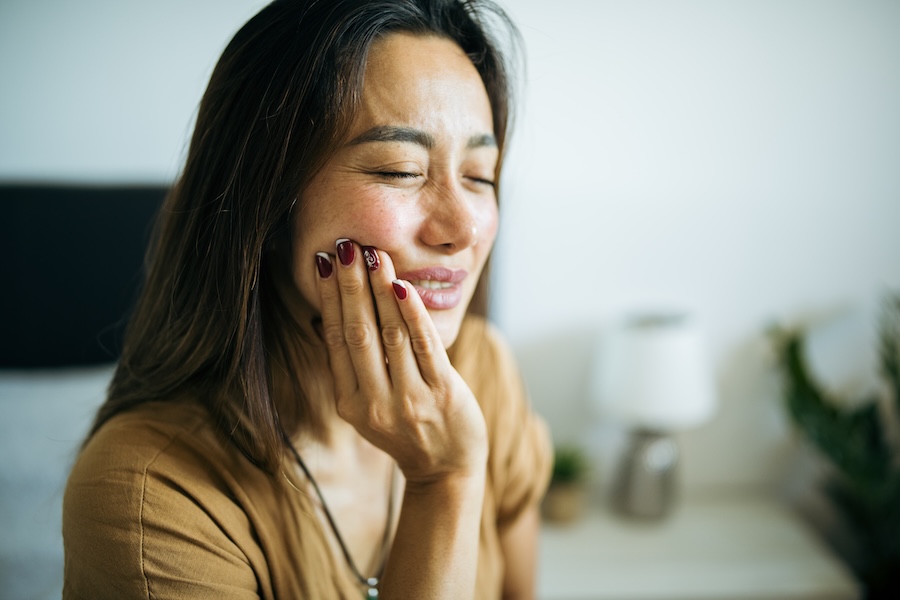
September 25, 2026 9:00 amA tooth can be completely forgettable for most of the day and then suddenly remind you it exists the second lunch gets involved. You can brush it, drink water, talk, and go about your morning without thinking twice. Then one bite lands in exactly the wrong place and you get that quick, sharp warning again.
At Main Street Dental in Bentonville, Arkansas, Dr. Grayson Dillingham and Dr. Joshua Brudi can examine a tooth that only hurts under pressure. A crack, a loose or worn filling, soreness around the root, decay, or irritation inside the tooth can all show up this way. We look at the tooth itself, the dental work around it, the gums, and the way your bite comes together.
That on-and-off pattern can make the problem easy to put off. If the tooth settles down as soon as you stop chewing, it is tempting to just move dinner to the other side and carry on. But a tooth that repeatedly complains under pressure is giving us something worth checking before a small weak spot turns into a larger break.
Does It Hurt When You Bite Down or When You Let Go?
The exact moment the pain hits can feel surprisingly specific. One tooth may hurt as soon as you press down, while another gives you a sharp jab right as you release the bite. Cracks, irritated tooth structure, and problems around an existing filling can all react differently to pressure.
You do not need to keep testing the tooth with crackers or nuts to figure it out. Just think back to what happens during a normal meal. Maybe the tooth is fine with soft food but suddenly protests when a popcorn kernel, crusty edge of bread, or firmer piece of meat lands on one corner.
Dr. Dillingham or Dr. Brudi will examine the tooth, check your bite, and use X-rays or bite testing when needed. Some cracks are easy to see, while others hide beneath a filling or run through a part of the tooth that is hard to view directly. What you have noticed at home gives us a fuller picture of how the tooth has been behaving between visits.
Could an Old Filling Be Involved?
A filling can sit quietly for years and then begin to wear, crack, loosen, or pull away around an edge. The natural tooth beside a large filling can also become thinner over time, leaving less solid enamel to handle the force of chewing. That is why we look at both the restoration and the tooth around it.
You may have noticed smaller changes before the biting pain started. Floss might suddenly snag in a spot where it used to slide through easily, your tongue may keep finding a rough edge, or food may start packing into the same little space after meals. Those changes can show up before the tooth becomes noticeably sore.
If only a small area is damaged, a new filling may be enough. If a large filling has left thin walls or one of the cusps has started to crack, a crown may give the tooth more support. Main Street Dental offers both fillings and dental crowns, so Dr. Dillingham or Dr. Brudi can recommend the repair that fits what is actually left of the tooth.
A Crack Can Be Small but Still Hurt Quite a Bit
A cracked tooth does not always look broken. You can stare at it in the mirror and see nothing unusual while the tooth sends a sharp reminder every time pressure hits one particular spot. Sometimes the crack sits underneath an old filling or runs between the raised parts of a back tooth.
The pain can also be inconsistent. You might make it through breakfast without a problem and then bite into something at lunch that makes you freeze for a second. By dinner, you may already be shifting food away from that side without really thinking about it.
Dr. Dillingham or Dr. Brudi can check for fracture lines, test different parts of the tooth, and look at the existing filling if there is one. A crack limited to the upper portion of a tooth may be repairable, while a deeper fracture can change what treatment is possible. The exam tells us how much stable tooth is still there to work with.
What If the Tooth Has Never Had a Filling?
Teeth without previous dental work can still become sore when you bite. A small crack can form after biting something hard, decay can weaken the tooth from the inside, or the ligament around the root can become irritated from heavy pressure. Gum inflammation around one area can also make a tooth feel tender when you chew.
Clenching and grinding are another possibility. You may wake up with a tired jaw, notice your teeth feel sore first thing in the morning, or catch yourself clenching through a stressful afternoon. One tooth can sometimes take more of that force than the others and start feeling bruised when you bite.
We check the bite along with the tooth and gums because pressure is not always spread evenly. If one tooth is hitting harder than its neighbors, Dr. Dillingham or Dr. Brudi can see how that contact may be affecting it. Main Street Dental also offers custom nightguards for patients who grind or clench.
Could the Nerve Inside the Tooth Be Irritated?
Sometimes biting pain comes from deeper inside the tooth. Decay, a crack, or a failing restoration can irritate the pulp, which contains the nerves and blood vessels inside the tooth. At first, pressure may be the only thing that gets your attention.
If the irritation grows, the tooth may start reacting to hot or cold too. You might notice that a sip of coffee suddenly lingers longer than it used to, or the tooth begins throbbing even when you are not eating. Pain that starts waking you up at night or becoming constant is a bigger change and should be checked promptly.
Dr. Dillingham or Dr. Brudi will look at the tooth, test how it responds, and take X-rays when needed. If the nerve has become badly inflamed or infected, root canal therapy may be needed before the tooth is restored. Main Street Dental provides root canal treatment as part of its restorative services.
Sometimes the Tooth Feels Taller Than the Others
A sore tooth can occasionally feel like it is hitting first when you close your mouth. You may describe it as taller, bruised, or simply different from the teeth around it. That sensation can happen when the ligament around the root becomes inflamed.
Heavy clenching, grinding, a recent filling, or trauma to the tooth can all irritate that tissue. Even a small difference in the way the teeth meet can make one spot take more pressure meal after meal. Dr. Dillingham or Dr. Brudi can check the contacts in your bite and see whether one tooth is carrying more than its share.
This kind of soreness can be easy to confuse with a crack because both can hurt when you chew. That is why we do more than look at the top of the tooth. The bite, gums, root area, and any existing dental work all get checked together.
What Should You Do Until Your Appointment?
Give the tooth a break from hard or crunchy foods for now. Chew on the other side if you need to, and avoid repeatedly biting on the sore tooth just to see whether it still hurts. A weakened tooth can break further if it keeps taking heavy pressure.
Also pay attention if the symptoms change. New sensitivity to hot or cold, swelling around the gum or face, a bad taste, throbbing, or pain that starts hanging around between meals are all changes we want to know about. If swelling becomes significant or the pain escalates quickly, call sooner.
Main Street Dental offers emergency appointments for problems such as severe toothaches, broken teeth, and dental abscesses. If the pain becomes more intense or you are worried something has changed quickly, call our Bentonville office so we can help you decide how soon you need to come in.
Biting Pain Care at Main Street Dental in Bentonville, AR
A tooth that only hurts when you chew can be easy to work around for a while. Maybe you have learned which side gets the crunchy food, which corner of the tooth to avoid, or exactly how carefully you need to bite into a sandwich. Eventually, though, rearranging every meal around one tooth gets old.
Dr. Grayson Dillingham and Dr. Joshua Brudi can check for cracks, worn or loose fillings, decay, gum problems, bite pressure, and irritation inside the tooth. Once we know what is behind the pain, we can talk through the repair that makes sense for that tooth.
If one tooth keeps making you hesitate before you bite down, schedule a visit with Main Street Dental in Bentonville, AR. We’ll get to the bottom of it so you can go back to eating without planning every bite around one sore spot!
Categorised in: Dental Tips, Toothache


