
Do Dental Sealants Work for Teens and Adults, or Are They Just for Kids?
August 21, 2026 9:00 amDental sealants tend to come up most often when children get their permanent molars. So, if your dentist mentions them when you are a teenager or adult, you may wonder whether you somehow missed the window. The good news is that there is no birthday when sealants suddenly stop being an option.
Dental sealants form a thin coating over the grooves of back teeth, helping keep plaque and food from settling into hard-to-clean areas. Dentists often recommend them soon after permanent molars come in, which is why so many people associate them with childhood dental visits. However, teens and adults can benefit from them too when the right teeth are still healthy and have grooves that are more likely to collect plaque.
At Main Street Dental in Bentonville, AR, Dr. Grayson Dillingham and Dr. Joshua Brudi can look at the shape and condition of your back teeth and tell you whether sealants make sense. Some adults have molars that have stayed cavity-free for years and do not need anything added. Others have deep grooves, a history of cavities, or changes such as dry mouth that make a little extra protection worth considering.
Do Dental Sealants Work for Teens and Adults, or Are They Just for Kids?
Yes, dental sealants can work for teens and adults. Children get most of the attention because permanent molars usually come in during childhood and the early teen years. Putting a sealant on those teeth early can protect the grooves before decay has much opportunity to get started.
Still, the sealant itself does not work differently because you are older. It covers the pits and grooves on the chewing surface of a molar, creating a smoother area where plaque and food have fewer places to settle. If that tooth is healthy and has deep grooves, the same idea can apply whether you are 14 or 40.
Teenagers may still have newer molars that have never been sealed. Second permanent molars often come in during the early teen years, so there can be a fresh set of chewing surfaces to think about even if other teeth were sealed years earlier. Between school, sports, braces, and late-night snacks, those very back molars may also be easier to rush past while brushing.
What Changes as You Get Older?
For an adult, you may have molars that have made it this far without a cavity but still have deep grooves that are hard to keep clean. Maybe one tooth always seems to hold onto food, or your cavity risk has changed because your mouth has become drier. In those situations, Dr. Dillingham or Dr. Brudi may bring up sealants even if nobody has mentioned them to you before.
Of course, not every healthy adult molar needs to be sealed. Some back teeth have broad, shallow grooves that a toothbrush can reach easily, and those teeth may have stayed healthy for decades. If a tooth already has a large filling or crown, it also has different needs from an untouched molar.
So, being an adult does not rule sealants out, but age alone is not a reason to get them either. Dr. Dillingham or Dr. Brudi will look at the actual tooth, your cavity history, and how likely that surface is to develop decay. That keeps the recommendation focused on the teeth that are most likely to benefit.
What Dental Sealants Do
If you run your tongue over one of your back teeth, you can feel that the chewing surface is not flat. Molars have natural dips, pits, and narrow grooves that help break down food. Some of those grooves are shallow, while others are narrow enough that toothbrush bristles cannot reach all the way into them.
Plaque can settle into those little spaces even when you brush well. Then, as bacteria use sugars and starches from foods and drinks, they produce acids that can weaken enamel. Over time, a deep groove that stays difficult to clean can become a common place for a cavity to start.
A sealant is placed over that chewing surface and flows into those grooves before it hardens. Once it is in place, the area is smoother and there are fewer tiny pockets where food and plaque can sit. You can still chew normally, but the hardest-to-reach parts of the tooth have a protective coating over them.
How Sealants Are Different From Fillings
Sealants are different from fillings because they are usually placed before a cavity has removed tooth structure. A filling repairs a tooth after decay has created damage, while a sealant is meant to help keep that damage from happening in the first place. In some cases, a very early area of decay that has not formed an actual hole may also be sealed after the dentist evaluates it.
Sealants only cover certain parts of the tooth, though. They do not protect the spaces between teeth or every area near the gumline. Brushing with fluoride toothpaste and cleaning between the teeth are still needed because cavities can form where the sealant does not reach.
For the right molar, covering those deeper grooves can make the surface easier to keep clean. You are not changing your entire dental routine or adding another complicated step at home. You are giving one cavity-prone part of the tooth some extra protection.
When Sealants May Make Sense for a Teen or Adult
Deep grooves are one of the main reasons Dr. Dillingham or Dr. Brudi may mention sealants. Some people naturally have smoother molars, while others have narrow pits that seem to hold onto plaque no matter how carefully they brush. If one tooth always feels harder to clean than the others, that is worth bringing up.
A history of cavities can also come into play. If you have had several cavities on the chewing surfaces of back teeth, there may be healthy molars that could benefit from added protection before they end up with fillings too. Keeping a healthy tooth intact is usually preferable to waiting until decay removes enough enamel that the tooth needs to be restored.
When Teens May Benefit From Sealants
For teens, newly erupted molars are often a good time to have this discussion. A tooth that has only recently come in may have deep grooves but no decay yet. If it is likely to collect plaque, placing a sealant early can protect that surface while it is still healthy.
Braces can make those back molars a little more challenging during the teen years as well. There are already brackets, wires, and extra areas to clean around, and the very back teeth may not get as much attention on a rushed morning. Sealants do not replace brushing, but they can give deeply grooved chewing surfaces another layer of protection.
When Adults May Benefit From Sealants
Adults may have other reasons for becoming more prone to cavities. Dry mouth is one example because saliva normally helps wash away food and neutralize acids. Certain medications and health changes can reduce saliva, so teeth that stayed healthy for many years may become more vulnerable.
Your eating and drinking habits can affect cavity risk too. Sipping sweetened coffee through the morning or snacking throughout the day gives bacteria more frequent access to carbohydrates. If a molar already has deep grooves that hold plaque, that repeated exposure can make the area more likely to develop decay.
Even with those factors, sealants are not something every person needs on every molar. One tooth may have deep grooves and be a good candidate, while the tooth beside it may be smooth and easy to brush. Dr. Dillingham or Dr. Brudi can point out the difference so you understand why one tooth may be recommended for treatment and another may not.
What Getting Dental Sealants Feels Like
If you have had a filling before, sealants are usually much easier. There is generally no drilling into healthy enamel, and routine sealant placement usually does not require numbing. Most of the appointment is spent getting the tooth clean and dry enough for the material to bond well.
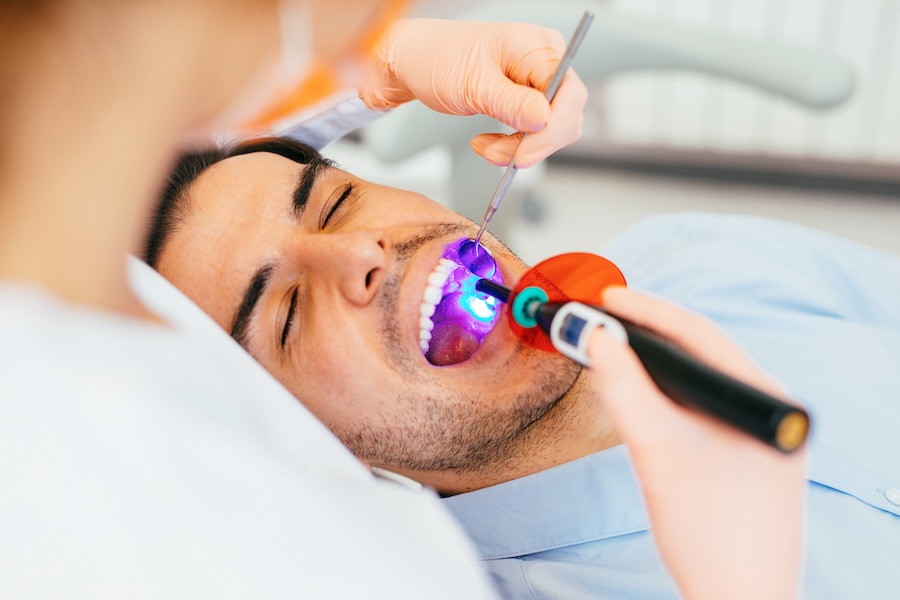
First, the dental team cleans the tooth so plaque and debris do not sit underneath the sealant. Then, Dr. Dillingham or Dr. Brudi prepares the enamel so the material can bond securely. After rinsing and drying the tooth, they place the sealant into the grooves and harden it, often with a curing light.
Once it has set, Dr. Dillingham or Dr. Brudi will check the tooth and make sure your bite feels comfortable. Your tongue may notice that the surface feels a little smoother or slightly different at first. Our mouths are surprisingly good at noticing tiny changes, but that feeling usually fades once you get used to it.
What Happens After the Sealant Is Placed
Afterward, there is generally not much disruption to your day. You are not waiting for numbness to wear off the way you might after a filling. In most cases, you can leave the office and get right back to your normal schedule.
Sealants can stay in place for years, but chewing gradually wears dental materials. During regular exams, Dr. Dillingham or Dr. Brudi can check whether the material still covers the grooves the way it should. If part of a sealant has worn away, it may be repaired or replaced.
Your dentist can keep an eye on the sealants during regular exams and let you know if one has worn down or needs to be touched up. If a sealed tooth starts feeling rough or different between visits, mention it when you come in. Otherwise, there is nothing special you need to do beyond your usual brushing and dental care.
What Sealants Can and Cannot Do
Sealants are very good at protecting one particular area: the pits and grooves on the chewing surfaces of back teeth. Those are places where food and plaque can hide even when the rest of the tooth looks clean. Covering them can make it harder for decay to get started there.
However, a sealant does not wrap around the whole tooth. You can still develop a cavity between two teeth, along the gumline, or on another surface that was not sealed. That is why fluoride toothpaste, cleaning between the teeth, and routine exams are still part of caring for sealed teeth.
Sealants also do not replace a filling when a tooth already has a larger cavity. Once decay has created a hole and tooth structure has been lost, that area generally needs restorative treatment. Dr. Dillingham or Dr. Brudi will check the surface first to make sure a sealant is the right choice.
What About Teeth With Existing Dental Work?
This can look a little different in an adult mouth because you may have a mix of untouched teeth and older dental work. One molar may have never needed treatment, while the next one has a filling and another has a crown. The healthy molar with deep grooves may be the one worth sealing, while the others are cared for based on the restorations already there.
Sealants can also wear down over time, so they are checked during regular dental visits. If part of the material has thinned or come off, the tooth may need a touch-up. That is usually easy to catch while Dr. Dillingham or Dr. Brudi is already looking at the rest of your teeth.
You also do not have to seal every back tooth just because one of them is a good candidate. If a few molars are smooth and have stayed healthy, they may not need anything added. Sealants can be used selectively on the teeth that are more likely to benefit.
Are Sealants Worth Considering if You Have Never Had a Cavity?
If you have never had a cavity, that is a good sign that your current habits and natural cavity risk have been working in your favor. It may also mean your molars have grooves that are relatively easy to keep clean. In that case, Dr. Dillingham or Dr. Brudi may not see much reason to seal every healthy back tooth.
Still, a cavity-free teen with a newly erupted molar can be a very good candidate for a sealant. The tooth is healthy, which is exactly when preventive treatment can help most. Protecting a deep groove before a cavity forms can help keep that enamel intact.
An adult can have a similar situation with one particular molar. Maybe most of your teeth have stayed easy to clean, but one back tooth has a narrow groove that always seems to collect food. If the enamel is healthy, sealing that surface may still be an option.
Cavity risk can change over time too. A new medication may cause dry mouth, or your eating habits may look different now than they did ten years ago. Teeth that never caused trouble before may become a little more vulnerable under different conditions.
If you are curious, ask Dr. Dillingham or Dr. Brudi to show you which teeth have deeper grooves. You can see whether the surface is healthy and hear why they do or do not recommend sealing it. That can make the recommendation easier to understand instead of leaving you to wonder whether every dark groove is something to worry about.
Will Dental Insurance Cover Sealants for Teens and Adults?
Insurance is one place where age can make a noticeable difference in coverage. Many dental plans offer sealant benefits for children and teens, often because the treatment is commonly recommended soon after permanent molars erupt. Some plans may cover the full allowed amount for eligible children, although age limits, tooth restrictions, deductibles, and other plan rules can still apply.
Adult Sealant Insurance Coverage
For adults, coverage tends to be less consistent. Some plans may still include sealants, while others stop covering them after a certain age or only cover specific permanent molars. So, even if Dr. Dillingham or Dr. Brudi recommends a sealant for a healthy adult tooth, your plan may not handle the cost the same way it would for a child.
You may also see limits on how often the same tooth can be sealed. If you had a sealant years ago and part of it has worn away, your plan may have a waiting period or frequency rule before it will contribute toward another one. Those details vary quite a bit, which is why checking your own benefits is more helpful than relying on a general rule.
Before treatment, Main Street Dental can help you review the benefit information available for your plan and give you an idea of what your share of the cost may be. If adult sealants are not covered, you can still ask what the fee would be and decide whether the added protection feels like a good choice for that tooth. That way, you know both what Dr. Dillingham or Dr. Brudi is recommending and what the financial side looks like before you move forward.
It is also worth remembering that insurance coverage and dental need are not always the same thing. A healthy adult molar may still be a good candidate even if your plan does not include sealants as a covered benefit. Dr. Dillingham or Dr. Brudi can explain why they are recommending it, and you can make the decision with a clearer picture of both the cost and the potential benefit.
Common Questions About Dental Sealants
Are Dental Sealants Only for Children?
No. Children and teenagers are common candidates because sealants are often placed after permanent molars come in. However, adults with healthy back teeth and deep grooves can benefit from them too.
Dr. Dillingham or Dr. Brudi will look at the condition of the tooth before making a recommendation. Your cavity history, the depth of the grooves, and any dental work already on the tooth can all affect the decision. Being an adult does not automatically make you too old for a sealant.
Can Teenagers Still Get Sealants if They Did Not Get Them as Children?
Yes. Teenagers may still have permanent molars that were never sealed, including second molars that came in later. If those teeth are healthy and have deep grooves, sealants may still be a good preventive option.
There is no rule that every sealant has to be placed the moment a tooth erupts. Dr. Dillingham or Dr. Brudi will first make sure the chewing surface is healthy enough to seal. If a cavity or filling is already there, the tooth may need something different.
Do Adults Really Benefit From Dental Sealants?
Some adults do. Healthy molars with deep pits and grooves may be harder to clean, while dry mouth or a history of cavities can raise the chance of decay. In those cases, a sealant may give that chewing surface extra protection.
Other adults may not need them at all. If your molars have shallow grooves and have stayed healthy for years, Dr. Dillingham or Dr. Brudi may recommend leaving them alone. The decision can be made one tooth at a time.
Can You Put a Sealant Over a Cavity?
A tooth with an established cavity usually needs a filling or another restoration instead of a routine preventive sealant. However, some very early areas of decay that have not developed a physical hole may sometimes be sealed. Dr. Dillingham or Dr. Brudi will need to examine the tooth before making that call.
Early decay does not always look like a dark hole. Sometimes the enamel has started to change while the surface remains intact. An exam can show whether the tooth is still suitable for a sealant or whether restorative treatment is needed.
How Long Do Dental Sealants Last?
Sealants can last for several years, but they do gradually wear as you chew. Some stay intact for a long time, while others need to be touched up sooner. Your bite and the location of the tooth can both affect how quickly the material wears.
Dr. Dillingham or Dr. Brudi can check the sealants during your regular exams. If part of one has worn away, it may be possible to repair or replace it. That check can happen right along with the rest of your routine dental visit.
Do Dental Sealants Hurt?
Routine sealant placement is usually comfortable because healthy tooth structure is not being drilled away. The tooth is cleaned, prepared, kept dry, and covered with the sealant material. Local anesthetic is generally not needed.
Your tongue may notice the new surface for a little while afterward. Even a small change can feel surprisingly noticeable inside the mouth. If your bite feels unusual after the sealant is placed, let the dental team know so they can check it.
Do I Still Need Fluoride Toothpaste if I Have Sealants?
Yes. Sealants protect selected grooves on the chewing surfaces of certain teeth, while fluoride toothpaste helps protect enamel throughout the mouth. They work in different ways and cover different areas.
You still need to clean between the teeth as well because sealants do not reach those spaces. Regular brushing, cleaning between the teeth, and dental visits help protect the areas a sealant cannot cover. The sealant adds another layer of prevention where the tooth may need it most.
Will My Insurance Pay for Adult Sealants?
Maybe, but adult sealant coverage is much less predictable than coverage for children and teens. Many plans cover sealants for younger patients and then stop at a certain age, while others may limit coverage to specific molars or only pay for the service once within a set number of years. So, even if Dr. Dillingham or Dr. Brudi recommends a sealant, your plan may treat it differently than it would for a child.
Before treatment, Main Street Dental can help you check what your plan includes and what your share of the cost may be. If adult sealants are not covered, you can still ask about the fee and decide whether the added protection feels worthwhile for that tooth. That way, you know both the dental recommendation and the financial side before moving forward.
Ask About Dental Sealants at Main Street Dental in Bentonville, AR
If you are a teen or adult who has never had dental sealants, you have not necessarily missed your chance. A healthy molar with deep grooves may still benefit, especially if cavities have been a recurring problem or something has changed your cavity risk. At the same time, teeth that are easy to keep clean and have stayed healthy may not need anything added.
At Main Street Dental in Bentonville, AR, Dr. Grayson Dillingham and Dr. Joshua Brudi can look at your back teeth, show you which surfaces may benefit from sealants, and help you understand what your insurance may cover. If you already have older sealants, they can check those while you are there too. Call Main Street Dental to schedule your visit, and we’ll be happy to help you keep those healthy teeth that way!
Categorised in: Dental Sealants


